Tuesday, February 17, 2026

My Atwood Project, Part 2: Life With Men

 At first read, Life Before Man (1979) appears to be a  devastating indictment of open marriage. 

*Spoilers ahead* 

At the center of the novel are Elizabeth and Nate, who are married, have two children, and also each have a lover. As the book begins, we learn that Elizabeth's lover Chris has committed suicide, and we later find out it's because she won't leave Nate for him. Nate's relationship with Martha has fizzled out and he starts a new liaison with Lesje (pronounced Lashia). Things go downhill from there. When Nate moves in with his new girlfriend, Elizabeth begins to manipulate the situation: dropping off the children without warning, demanding money that she knows Nate does not have, etc. While Nate and Lesje are living in poverty, Elizabeth is not exactly happy either. In fact, no one is, and the message seems to be that open marriage is a bust.


When I read Atwood's memoir, I learned that this is a fictional version of her real experience with Graeme Gibson. Graeme was married to Shirley, and they had two boys. And Shirley actually did these, and other, manipulative, narcissistic things to Atwood and Gibson. I wonder how Gibson, a novelist, felt when he saw himself portrayed as Nate, the former lawyer who becomes a toy maker, then must return to law to support himself and Elizabeth and Lesje. In real life Shirley eventually granted a divorce, but Gibson never married Atwood, claiming that he did not want to add “another Mrs. Gibson” to his life. They did have one child together, though Atwood would have liked a second. 


This novel is a departure from the previous three novels. Though it does contain the motif of a woman between two men, Elizabeth does not have a magical moment of madness and recover her pre-man identity: she is pure, cold calculation throughout. If we consider Lesje the central figure, because of the title (she's a paleontologist) and the parallel of her story to Atwood’s, her moment of madness resembles the one in Surfacing: pregnancy out of spite. She is so frustrated with her situation that she decides to get pregnant behind Nate’s back, in order to wrench his attention away from Elizabeth and back to her. Quebecois separatism lurks in the background as in Surfacing, as well. The title might imply that Lesje's (Atwood’s?) life was better before she got involved with Nate. At any rate, Atwood and Gibson remained a loving couple for many years until he passed away.


The only comic relief in this sad tale is Elizabeth's evil Aunt Muriel. As I mentioned in my last blog post, you could write a thesis on the aunts in Atwood's work. The next novel, Bodily Harm, returns to the model of the first three novels, and introduces elements that would evolve in Atwood’s next and most famous work, The Handmaid’s Tale. Stay tuned!

Monday, February 16, 2026

My Atwood Project, Part 1: Before The Handmaid’s Tale

My Atwood Project, Part 1: Before The Handmaid’s Tale

I just finished reading Margaret Atwood’s delightful Book of Lives: A Memoir of Sorts. (Thanks, hubby, for the holiday gift!) Delightful, because it’s a balanced mix of her real life with the lives of her novels. Also, because she takes a light and playful approach to her enemies: there are more “You know who you are’s” than names. 


The whole experience inspired me to re-read Atwood’s fiction oeuvre in chronological order, which I have never done. I’ve lined up the novels and short story collections on my shelf; there is only one I don’t have, a serially published e-book co-authored with her mentee Naomi Alderman, The Happy Zombie Sunrise Home. I may pursue the poetry and non-fiction later, but this is a pretty hefty project as it is, 18 novels and 12 novellas or collections of short stories.

BEWARE, SPOILERS AHEAD.


Let’s begin with the first three novels, of which I had only the vaguest memories. I started noticing some patterns right off. The Edible Woman (1969) is the story of Marian, who ever since she became engaged to her conventional boyfriend Peter, is able to eat less and less, while she spends more and more time with hapless graduate student Duncan. Tellingly, Peter lives in the model apartment of an unfinished building, signifying perhaps the incomplete and superficial nature of their relationship. 


The most interesting technique to me here is the shifting perspective: not between characters, as Atwood experiments with later, but from first to third and back again. In the first part of the book, Marian speaks confidently enough from the “I” perspective. In the middle of the book, where she becomes Peter’s almost accidental fiancĂ©e, she becomes a passive “she,” acting by turns like a future Stepford wife and like a woman on the edge. In the final section, she reclaims her identity by seizing the “I” again, and also by the memorable baking of a woman-shaped cake, which she offers Peter in place of herself. I feel I hardly need to explain, but I will: to me, this scene means that Peter was basically consuming her like food, not engaging (haha) with her as a person, so he might as well eat her in effigy. Whether he understands the significance of the cake or not, Peter freaks out and flees the scene. Duncan, on the other hand, eats some of the cake, and pronounces it delicious. Their future is ambiguous.


The motif of a woman discovering herself between two men recurs in Surfacing and Lady Oracle as well, where the territory gets more exotic: the northern Canadian wilderness of Atwood’s childhood in Surfacing, and a small town in Italy in Lady Oracle. Also, the idea of political unrest, connecting the personal and the political, is introduced. 


In Surfacing (1972), the unnamed protagonist is seeking her father, who’s gone missing, at their summer home in the Canadian wilderness. She gets a ride there with her boyfriend Joe and another couple, Anna and David. She is as ambivalent about Joe as Marian was about Peter. In addition, David treats Anna abusively and tries to sleep with the protagonist. So again, we see a woman between two men, and again, she claims her own identity after a brief bout of mad-looking behavior.


The title refers, I think, mostly to the return of a suppressed or reframed memory: the heroine has referred to an ex and a baby, and implied that the two are together, away from her. In fact, he coerced her into an abortion. During her brief feral episode, she has sex with Joe and plans to raise the eventual baby on her own. The political issue lurking in the background is Quebecois separatism, echoing the woman’s desire for independence. However, by the end, her relationship with Joe, while still unclear, appears more optimistic than that with Duncan at the end of The Edible Woman.


Finally, Lady Oracle is the most enjoyable of the three, for me. Joan Foster is a woman of many identities: formerly obese, now thin; a romance writer using her late aunt’s name to publish -- and now to hide. She’s gotten herself into quite a predicament, between her depressed husband Arthur, and her eccentric lover Chuck, aka The Royal Porcupine, harking back to Peter and Duncan of The Edible Woman, and presaging Nate and Chris of Life Before Man. 


(Please don’t think that Atwood’s love triangles are easy plot devices. Each book is so rich with subplot and backstory, I’m sure theses have been written just about the aunts.)

At any rate, political unrest becomes a device that allows Joan to fake her death -- perhaps as the father in Surfacing may have done? We also have the strongest, so far, story within a story, as Joan’s latest romance novel turns into a way for her multiple selves to meet. This device recurs in The Blind Assassin, and perhaps I’ll rediscover others as I reread.


Again, these are complex novels, and I’m only pointing out some of the more obvious trends. I enjoyed them all more this second time around, with the background of Atwood’s life shedding light here and there. Stay tuned for my take on the painfully autobiographical Life Before Man. 


Saturday, October 4, 2025

Delicate Edible Birds by Lauren Groff

 As a comparatist, one of the highest compliments I can give a piece of writing is to say "This reminds me of…." Delicate Edible Birds, a 2009 collection of short stories by Lauren Groff, prompts me to reminisce on several of my favorite writers.


The first story, “Lucky Chow Fun,” is redolent of Margaret Atwood, especially her own collection Bluebeard’s Egg: they share the same fascination with fairy tales, and with the fates of young women. Lollie, the main character, is at that liminal age between high school and college, much like Atwood’s Stephanie in “My Last Duchess,” from the collection Moral Disorder. The narrator looks back on herself as a young woman: how oblivious she was! Young girls “work” at a Chinese restaurant; the protagonist’s little sister goes birdwatching with the richest man in town. But which situation is actually dangerous? 


The story of “L. DeBard and Aliette” reminds me of F. Scott Fitzgerald's “Head and Shoulders,” itself O’Henryesque. In the Fitzgerald story, a man starts off earning a living with his head, but switches to his shoulders (as a gymnast), while his beautiful dancer wife takes the opposite route, becoming an intellectual. Here in Groff's story, a precocious girl whose legs have been weakened by polio strengthens them with the help of her swim coach and eventual lover, who gives up swimming to become a renowned poet. I’m still scratching my head over their son’s name, Compass.


“Sir Fleeting,” with its impoverished but seductive aristocrat, reminds me of the many unsanctified relationships in Anais Nin’s erotica: aristocrat and agrarian, in this story, but also young woman and older (“Fugue”), or young man and boss's daughter (“L. DeBard and Aliette,” “Majorette”). 


Finally, the title story is a retelling of Guy De Maupassant’s “Boule de Suif,” or “Ball of Lard.” Maupassant’s story takes place during the Franco-Prussian war. The title character in the French story is a prostitute with a heart of gold, and a well-fed stomach. She and others are fleeing the Prussians in a coach, and she is the only one who has brought food, which she kindly shares. The haughty passengers have no qualms partaking of her picnic. When the Germans catch up with them, Ball of Lard refuses on principle to sleep with the German commander. The others pressure her until she breaks down, then disparaging the woman who generously fed them -- and freed them. 


In Groff’s story, the protagonist Bern is a female journalist during World War II with a reputation for “giv[ing] it away for free.” She and four male colleagues are fleeing Paris in a Jeep. She’s not the type to pack a  picnic but she did “liberate” a bottle of whiskey. When they run out of gas, they stop at a farmhouse. Unluckily, the farmer is a Nazi sympathizer, and Bern reminds him of his dead wife. He locks the group in a barn waiting for Bern to succumb. Will it play out the same way as Maupassant’s cynical tale?  


Tuesday, January 7, 2025

Some great reads from 2024

I read 124 books in 2024: my goal every year for a while now has been 100 plus the last two digits of the year. Here are five standouts in various genres. 

One of my favorite genres is post-apocalyptic novels, and one of the most original ones I read this year was After World by Deborah Urbanski. The premise: humans have asked an artificial intelligence how they can save their planet. The reply: end your physical existences and upload your consciousnesses. Surprisingly, humanity complies. Each person is assigned a "storyworker," an artificial intelligence tasked with summing up that human's life for the upload. Twist: the storyworker assigned to the last human falls in love with her.

For those who are into young adult fantasy, I truly enjoyed Leigh Bardugo's Grishaverse books, starting with Six of Crows. The action-packed adventure includes a diverse crew with strong female characters, tackling themes of friendship and surviving trauma. This book will leave you hanging, but no fear, there are several more!

For those interested in literary classics, James by Percival Everett is on the top of a lot of important lists this year. It is a rewriting of The Adventures of Huckleberry Finn from the point of view of young Huck's enslaved friend, Jim, aka James. Everett plays with the idea that Mark Twain may have based the character of Huck Finn on an African American, and takes it to a surprising conclusion.

Lost and Found by Brooke Davis is the poignant and hilarious story of an abandoned child, who is found and cared for by two otherwise anti-social elderly people, helping to transform their lives for the better. Sounds like a typical feel-good plot but it's carried off with originality and lots of humor. I recommend the audiobook for the very entertaining Australian accents.

Finally, Horse by Geraldine Brooks is a unique historical novel that moves in time between the present, where an art historian finds himself working with a scientist on a skeleton of a horse; and the antebellum period, when an enslaved man trained that racehorse for the people who owned them both. Brooks offers unique insight into lesser-known facets of African American history, and racism, both contemporary and historical.


Monday, July 17, 2023

A Kinder, Gentler Dubus?

When I have described Andre Dubus III in the past to people who do not know his work, I used to say, "The man writes only tragedies." He writes of the woes of the working class, treating the same topics as Raymond Carver's K-mart realism, but with an antithetical style: he weaves intricate tapestries of trouble. His best known work is probably The House of Sand and Fog, on which an acclaimed movie was based, the story of a tug of war between two families, with the house in the middle; in the end, there are no winners.


My favorite of his work is The Garden of Last Days, which alternates between the perspectives of a working class man, a stripper, and a pilot training to crash an airplane into a tower. Another work with only a kernel of hope at the end.

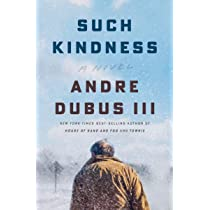
Dubus' latest work, Such Kindness, focuses on one Tom Lowe, who has indeed been laid low. First by the variable interest rate mortgage fiasco. Then by a fall from the top of a roof he was repairing. Then from oxycodone addiction as he recovered from his broken back and pelvis. Along the way he lost his wife and son. Now Tom sits, or rather lies, in his Section 8 housing unit, fretting over what he can do for his son's 20th birthday.

Then somehow Tom begins to change. He rediscovers the line between right and wrong, and determines not to cross it. He becomes more open to his neighbors. And he begins receiving small gifts of kindness. Such kindness that he must pay it forward.

Glancing through other reviews of this book, I did see the word "cloying." And perhaps Tom's story is implausible to some. But perhaps those people have not hit rock bottom, and what a gift that is. I think it's a meditation on growth and gratitude, two things we all could use.

Friday, July 22, 2022

Coming of Age: Girls on a Mission (and one boy)

I recently read two books that reminded me of each other, and of a classic that has been fading in my memory, so now I'm rereading it. All are about young people doing more than coming of age: they are on a mission.

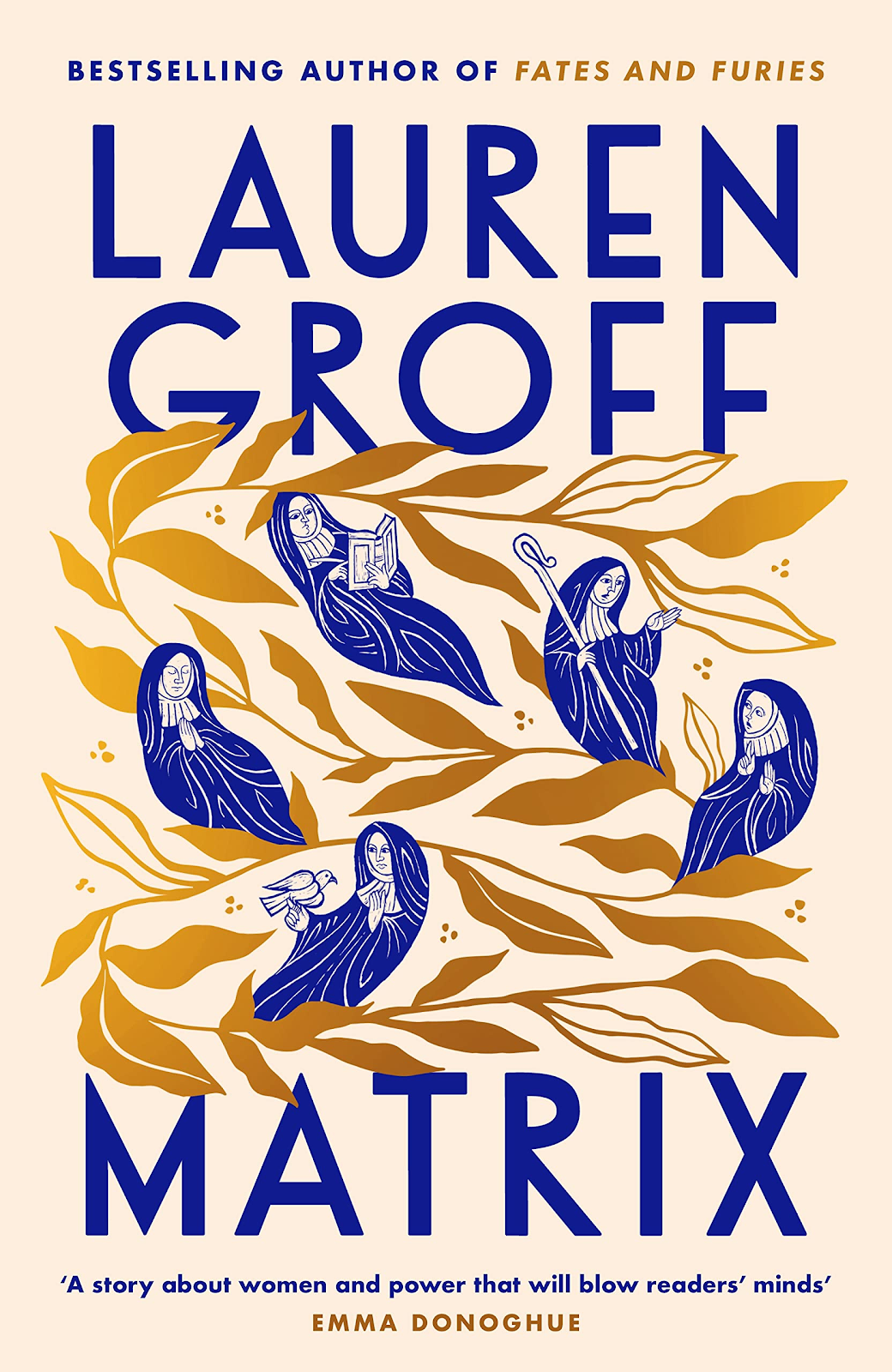
First, I recently read Lauren Groff's latest novel, Matrix. I had no idea what it would be about and was pleasantly surprised to find it set in Medieval France. Her other books I have read, Fates and Furies, Arcadia (my favorite), and the short-story collection Florida, are set in the contemporary United States. I was thoroughly captivated by this beautifully imagined life of Marie de France, first known female poet of France, and her love for Queen Eleanor of Aquitaine. Marie, homely bastard child of rape, but educated and partly noble, is exiled from Eleanor's court to an English convent. There, she grows into her wit and wile, becoming Abbess, and creating her own miniature queendom inspired by stunning hallucinatory (and sensual) visions of women in power. This novel reminds me of Hilary Mantel's amazing trilogy on Cromwell that won two Booker prizes, because of the way we get to know this ambitious character in a thoroughly researched historical setting, but this time with no male characters to speak of.


She Who Became the Sun, by Shelley Parker-Chan, was even more impressive in its own way. The story opens on a father and two children in a drought in medieval China. The father gives his last fresh food to a fortuneteller, and learns that his son has a great destiny. The girl's destiny, of course, is "nothing." However, after the father is killed, the son gives up on life, and the audacious clever daughter says to herself, why should I not take over my brother's destiny? And so she does: she becomes the son. She goes to the local monastery, presents herself as her brother Zhu Chongba, and through persistence becomes its leader's right hand "man." When a eunuch general in service to the Mongols burns the monastery down, Zhu has found her foil: both are excluded from the realm of men, yet have found their own paths to power. It's a fascinating exploration of the conflict between fate and desire, and speculation on women in forbidden roles.

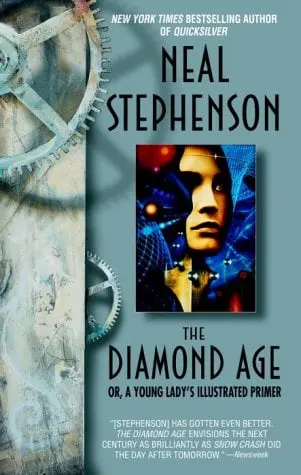
This second novel reminded me strongly of The Diamond Age: Or, a Young Lady's Illustrated Primer,  by Neal Stephenson. The place is also China, but several centuries after the Mongol invasion -- and after our present. The greatest similarity is a stolen fate. An engineer has been commissioned to create an interactive book that will train his patron's daughter to be subversive: to find a novel way to succeed in a conformist society. The engineer, of course, wants a copy for his own daughter, and goes to great lengths to create one illegally -- only to have it stolen by a street criminal, who gives it to his little sister. In this way, Nell unwittingly steals another child's destiny and will fulfill it in a most unexpected way. This Stephenson classic is not just a coming of age story, but a vision of a whole society molded by nanotechnology and the MC, or matter compiler -- basically, ubiquitous 3D printers that make manufacturing and shipping obsolete. It's breathtaking to go back to this book written in 1995 and see how far Stephenson was looking into our future, as he always does.


And if you want to round out your reading with a young man on a mission, I recommend How to Find Your Way in the Dark, by Derek B. Miller. Young Sheldon's mom and aunt die in a tragic movie house fire, in the years leading up to World War II. After the funeral, Sheldon's father's truck is run off the road and the father is killed, too, leaving Sheldon an orphan obsessed with revenge. He goes to live with the cousins who lost their mother in the cinema fire, and begins to seek out his father's killer. When he and his friend spend a summer in the Catskills, working as bell boys, he unexpectedly gets his chance. It's part boys' adventure, part chilling detective work.  


Monday, June 27, 2022

Emily St. John Mandel's Reading List

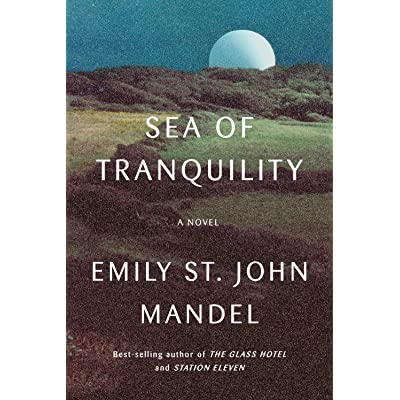
 At the end of Emily Mandel's Sea of Tranquility, she lists these eleven books (including her own Station Eleven, must be a favorite number) that influenced her and that she recommends. I thought I'd share the list and my reactions.


1. The Handmaid’s Tale by Margaret Atwood. I loved it, I have taught it, you may have watched it, now we're living it. If you haven't read it, you must. There's a reason it tops the list. 

2. To the Bright Edge of the World by Eowyn Ivey. I loved it. In 1885, a US Army Colonel is sent to explore Alaska, while his wife reluctantly stays home, discovering birds and photography. You'll recognize the Pacific Northwest setting shared in Sea of Tranquility. 

3. Station Eleven by Emily St. John Mandel. I loved it. Speculative, post-apocalyptic tale about the role of culture in civilization.

4. The Time Traveler’s Wife by Audrey Niffenegger. An amazing love story about an involuntary time traveler and his love, and their intersections at random times in their lives. 

5. Stories of Your Life and Others by Ted Chiang. Wonderful Chinese-influenced sci-fi short stories. The title story, about first contact with extraterrestrials who do not think linearly, was adapted to the film Arrival.

6. Cloud Cuckoo Land by Anthony Doerr. Like Sea of Tranquility, this incredible novel intertwines parallel stories in the past, present, and future, about the power of story. 

7. Dune by Frank Herbert. I read this a long time ago; I found it interesting, but not enough to read the whole saga. 

8. Crystal Eaters by Shane Jones. The only one on this list I have not read yet. I'm on a wait list.

9. The Road by Cormac McCarthy. Grim post-apocalyptic speculation.

10. The Opposite House by Helen Oyeyemi. I tried to read this, and found it very confusing and not very engaging. However, I loved her collection of short stories, What is Not Yours is Not Yours. From my Goodreads review, a "mix of really original stuff, fables and fairy tales with a modern twist. Think Margaret Atwood meets David Mitchell."

11. State of Wonder by Ann Patchett. I'm a big fan of Ann Patchett, but this is not one of my favorites. It's about an Amazon tribe that seems to have mastered fertility. But I can highly recommend Bel Canto and The Magician's Assistant.